


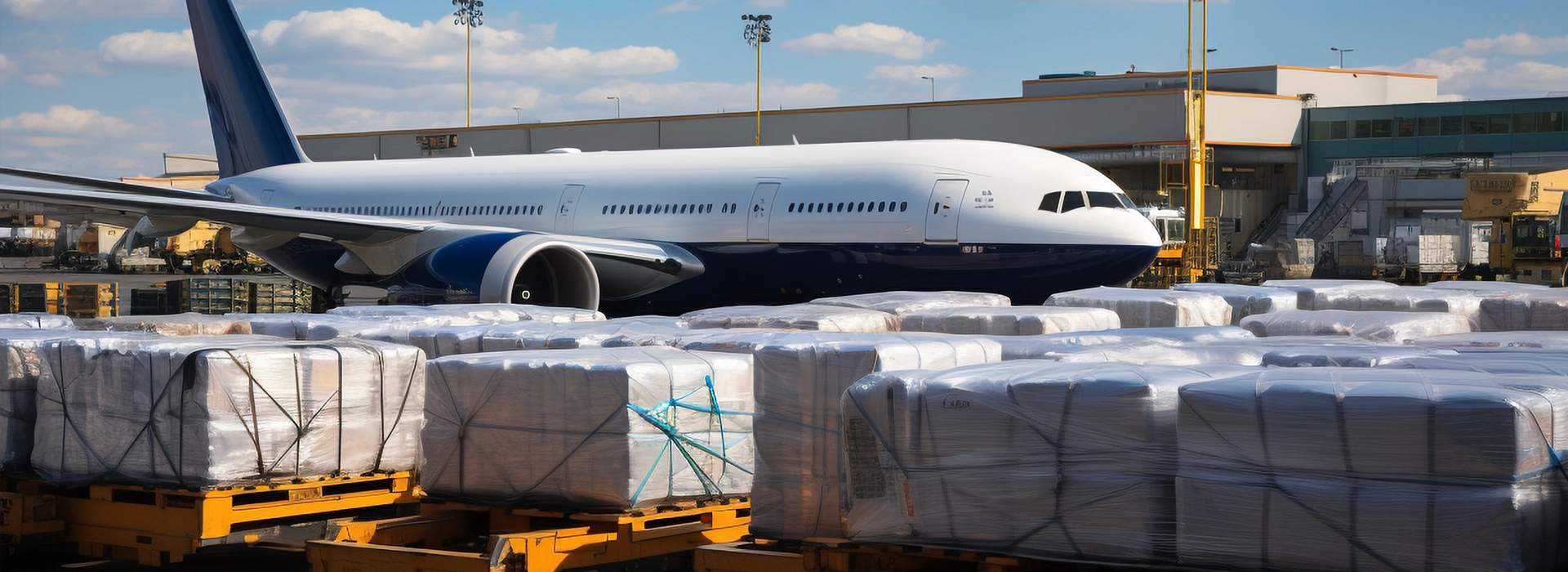














Philippine international air cargo welcomes strong recovery: cargo volume in the first quarter of 2026 increased by 16% year-on-year and exceeded 124 million kilograms
According to the latest statistics from the Civil Aviation Bureau of the Philippines (CAB), Philippine international air cargo and mail throughput reached 124.457 million kilograms in the first quarter of 2026, a year-on-year increase of 16%. Among them, the inbound cargo volume reached 66.789 million kilograms (an increase of 10.4%), and the outbound cargo volume reached 57.669 million kilograms (a year-on-year increase of 23%). Philippine Airlines, Cebu Pacific and Royal Air Lines rank among the top three, with cross-border trade and e-commerce logistics showing strong momentum.

1. Overview of macro data and throughput
According to the latest official cargo statistics released by the Civil Aeronautics Board (CAB) of the Philippines, total Philippine international air cargo and mail throughput achieved strong double-digit growth in the first quarter of 2026, reaching 124,457,000 kilograms (approximately 124,500 tons) , a significant increase from 107,330,000 kilograms in the same period last year 16.0% . This data continues the steady upward trend since 2025 and further establishes the Philippines' strategic position as a key logistics transit node and emerging consumer market in the ASEAN region.
From the perspective of import and export cargo flow structure, a total of 44 international and local carriers participated in international air cargo operations this quarter:
- Inbound freight (Inbound): Reaching 66,789,000 kilograms, accounting for 53.7% of the total throughput, a year-on-year increase of 10.4% (60,477,000 kilograms in the same period last year), reflecting the strong domestic import demand for industrial semi-finished products, consumer goods and cross-border e-commerce packages in the Philippines.
- Outbound freight: The performance was particularly impressive, reaching 57,669,000 kilograms, a year-on-year surge 23.0% (46,853,000 kilograms in the same period last year), demonstrating the accelerated recovery of the Philippine agricultural products, electronic components manufacturing and fresh food export supply chains.
2. Airline carrier structure and core capacity rankings
Among the 44 airlines participating in the operation, the three major local carriers occupy a dominant position in the market. At the same time, hub airlines such as Hong Kong, Singapore and the Middle East also recorded significant traffic growth.
| Ranking | airline | Q1 freight volume in 2026 (10,000 kilograms) | market share(%) | Year-on-year increase or decrease (%) | Route and Capacity Characteristics |
|---|---|---|---|---|---|
| 1 | Philippine Airlines | 2,133.1 | 17.1% | +22.5% | Ranking firmly at the top of the list, the route network in North America and East Asia has ample capacity. |
| 2 | Cebu Pacific | 1,860.6 | 14.9% | +23.8% | Belly hold utilization increased, and regional passenger-to-cargo/narrow-body aircraft performed outstandingly |
| 3 | Royal Air Philippines | 924.8 | 7.4% | - | Added new all-cargo aircraft capacity, ranking among the top three camps |
| 4 | Cathay Pacific | 766.5 | 6.2% | +40.0% | Relying on the Hong Kong super hub to transship high-value goods from Europe and North America |
| 5 | Singapore Airlines | 642.5 | 5.2% | +32.7% | Southeast Asia’s transshipment hub network continues to expand |
| 6 | Air Hong Kong | 596.9 | 4.8% | +13.7% | Focus on all-cargo express and high-time express express lines |
| 7 | FedEx | 571.7 | 4.6% | +18.0% | Clark regional transshipment center cargo flow steadily increases |
| 8 | EVA Air | 561.7 | 4.5% | -12.0% | Transpacific route capacity structure adjustment |
| 9 | Korean Air | 455.6 | 3.75% | +30.3% | South Korea transshipment hub undertakes cargo flow of high-tech spare parts |
| 10 | Emirates | 417.4 | 3.4% | -19.7% | Bellyhold cargo volume on long-distance routes to the Middle East and Europe has been slightly adjusted |
Performance of other major airlines: Japan Airlines (3.368 million kilograms), UPS United Parcel Service (3.208 million kilograms), China Airlines (2.914 million kilograms), ANA (2.761 million kilograms), Qatar Airways (2.615 million kilograms), China Southern Airlines (1.570 million kilograms), YTO Airlines (1.521 million kilograms) and JD Airlines (983,000 kilograms) all provide stable capacity support on subdivided routes.
3. Analysis of growth drivers and supply chain trends
- Cross-border e-commerce penetration accelerates: Major e-commerce platforms in Southeast Asia have become regular in their sales promotions, and the reliance on high-efficiency air transport for small packages, fashion fast-moving consumer goods, and household department stores continues to increase.
- Electronics and advanced manufacturing are picking up: As an important base for semiconductor packaging and testing, the Philippines maintains a high-frequency turnover of raw material imports and finished product transshipments from South China and East Asia.
- Hub multi-point diversion effect: As the capacity of Manila's Ninoy Aquino International Airport (NAIA) approaches saturation, Clark International Airport (CRK) and Subic Bay aviation logistics facilities gradually play an undertaking role, and the efficiency of logistics collection and distribution is significantly improved.
💡 Sunny Worldwide Logistics industry observation and freight forwarding suggestions
[Note: This section provides professional operating advice for freight forwarding companies and is strictly distinguished from official objective news facts]
- Air freight booking and space planning: In view of the two-way growth of outbound and inbound cargo volume in the Philippines, and the tight balance between direct flights and Hong Kong transshipment positions during the peak season, it is recommended that high-efficiency cargo lock trunk space 3-5 days in advance.
- Sea and air transport and dedicated line configuration: For ordinary bulk cargo, it is recommended to combine sea freight less than container load (LCL) and all-inclusive customs clearance line (DDP/DDU) to optimize costs; for high-value precision instruments and express shipments, it is recommended to choose a high-quality airline solution that goes directly to Manila or Clark.