









The Philippines PPA releases the latest port data: cargo volume has grown steadily, and the Port of Manila has implemented a number of coordinated governance measures
The latest data released by the Philippine Ports Authority (PPA) shows that the cargo throughput of ports across the country maintains a steady expansion momentum. Facing the peak of foreign trade container import and export, Manila's two major hub ports (MICT and Nangang) have maintained the average utilization rate of the yard in a healthy range by dynamically adjusting fuel surcharges, strictly controlling overdue heavy containers, and deepening the customs-port linkage mechanism to fully ensure the efficient flow of transnational supply chains.

1. Core throughput and regional port performance
According to the official statistics and industry monitoring report of the Philippine Ports Authority (PPA), the cargo throughput of maritime ports in the Philippines has shown a steady growth trend, and the growth rate of foreign trade container throughput is particularly eye-catching. China’s exports of machinery and equipment, construction hardware, photovoltaic modules, daily necessities and e-commerce retail goods to the Philippines constitute the core driving force for the growth of Manila Port’s cargo volume.
In order to visually demonstrate the effectiveness of port operations, the core operating indicators disclosed by PPA and major terminal operators are as follows:
| Operational indicator classification | Key data/indicator performance | Operation status assessment and industry impact |
|---|---|---|
| National port cargo throughput | In the first half of the year, it exceeded 154 million tons, a steady increase of about 5.8% year-on-year. | Foreign trade import and export demand is strong, and regional trade resilience is highlighted |
| MICT yard average utilization rate | Maintained in the healthy range of 68% - 72% | There is no serious structural congestion, and the berthing of ships and the flow of suitcases are normal. |
| Manila South Harbor | The yard utilization rate is about 65% - 70% | Berth turnover efficiency is improved, and the time for truck entry and exit is shortened |
| Processing rate of overdue heavy containers | The clearance rate of heavy containers detained for more than 30 days increased by 35% year-on-year | Compulsory port clearing and tiered rates effectively force consignees to pick up boxes |
| Fuel surcharge adjustment mechanism | Establish a quarterly dynamic linkage evaluation mechanism | Enhance the transparency of terminal operation charges and avoid unreasonable price increases |
2. Collaborative Governance: Relieving Container Detention and Standardizing Charges
As the core foreign trade gateway of the Philippines, the Manila International Container Terminal (MICT) has continued to promote digital gate and yard space optimization in recent years. In response to the pain points of "delayed return of empty containers" and "long-term congestion of imported heavy containers at the port" that were prone to occur during peak seasons in previous years, PPA, together with the Philippine Bureau of Customs (BOC), terminal operators and the Freight Forwarding Truck Association, focused on promoting the following governance measures:
- Strict detention management of heavy containers : Implement tiered overdue storage fees for heavy containers stored at terminals beyond the Free Time, and launch joint auctions or bonded relocation procedures for containers that are overdue for more than 30 days and have not been cleared for pick-up, to release core terminal yard resources.
- Regulate transparent port charges: Published detailed guidelines for the adjustment of terminal fuel surcharges and operating fees, requiring all collections involving handling, devanning and storage fees to be transparent and compliant, and to eliminate open contracts and vague price increases.
- Customs Green Customs Clearance Collaboration : Expand the coverage of advance customs declaration and electronic release (OLRS) to achieve "pre-examination of documents before the ship berths, and inspection upon berthing", significantly reducing the waiting time for customs clearance at the destination port on the route from China to Manila.
3. Cross-border trade and freight forwarding operation suggestions
For cargo owners and manufacturing companies engaged in China-Philippines foreign trade exports, although the overall flow in the Manila port area is smooth, the fourth quarter is the traditional peak season for shipments, and it is still necessary to pay close attention to the details of shipping and customs clearance operations:
- Document consistency : The certificate of origin (Form E) must be strictly checked with the product name, HS code, and piece weight of the invoice and packing list to avoid manual inspection at the customs red channel due to minor differences in documents;
- Free stacking period planning: According to the customs clearance plan at the destination port, apply to the shipping company in advance for more than 14 days of Detention & Demurrage for containers at the destination port to reserve sufficient buffer time for final delivery.
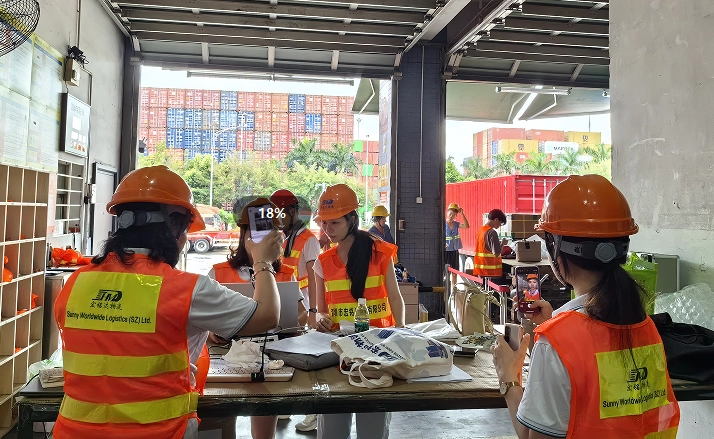
(Note: In the performance of cross-border supply chain contracts, professional international logistics service providers represented by Sunny Worldwide Logistics are relying on the mature China-Philippine Duty Clearance (DDP/DDU) sea and air freight dedicated line network, self-operated destination port customs clearance houses and overseas warehouse collaboration to provide cross-border customers with full-process visual tracking and compliance guarantees.)