








Philippines PPA releases latest freight data: Manila Port throughput has grown steadily, and digital initiatives have significantly improved customs clearance efficiency
The latest report from the Philippine Ports Authority (PPA) shows that thanks to the rebound in import and export foreign trade freight demand and the upgrade of the port’s digital customs clearance system, the Manila International Container Terminal (MICT) yard utilization rate has stabilized at a healthy range of 65% to 70%. The detention time of containers at the port has been significantly shortened, and the overall customs clearance turnover and operating efficiency of the port have been significantly improved, providing strong support for the stability of the regional supply chain.

The Philippine Ports Authority (PPA) recently released the latest port operations and foreign trade freight data report. Thanks to the acceleration of economic and trade exchanges in Southeast Asia and the steady advancement of domestic infrastructure construction, the freight throughput of major maritime hub ports in the Philippines continues to improve. Data shows that ports across the country have achieved steady growth in many key logistics indicators such as container handling volume, foreign trade import and export freight volume, and ship berthing efficiency.
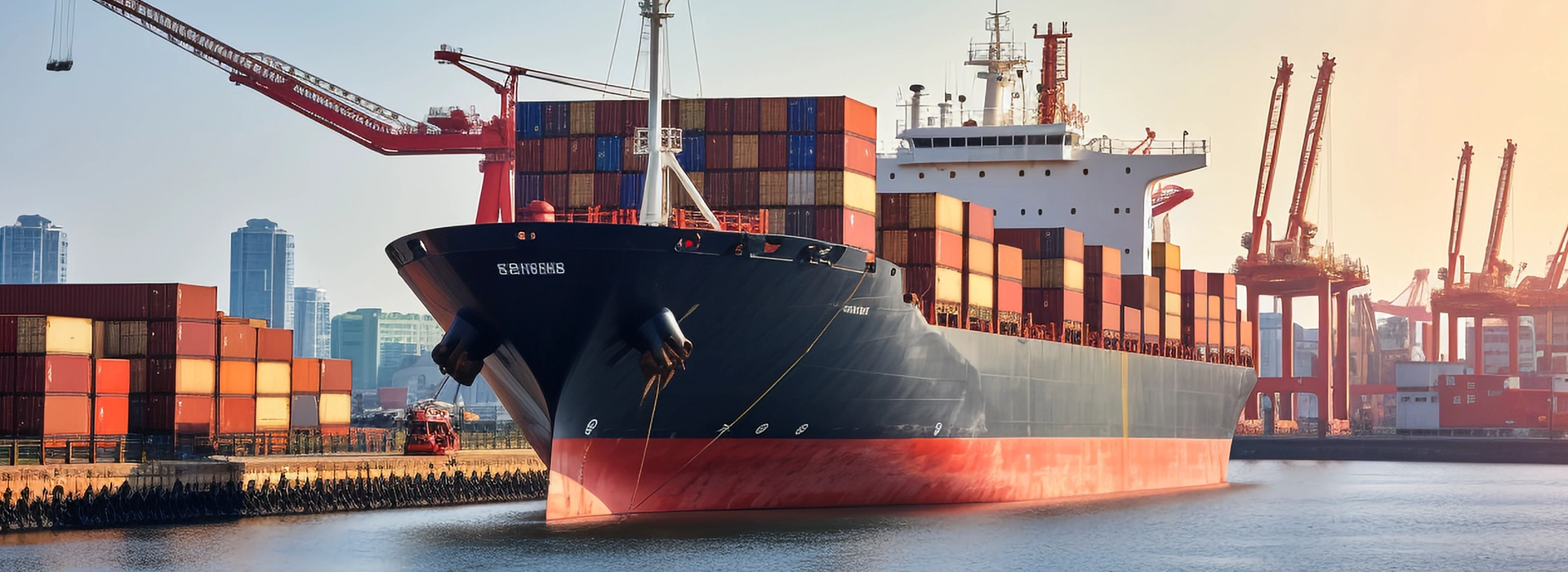
As the Philippines' most important international shipping gateway, the operating performance of the Manila International Container Terminal (MICT) and Manila South Harbor is particularly eye-catching. According to data jointly disclosed by PPA and International Container Terminal Services Inc. (ICTSI), the average utilization rate of container yards in Manila's core port area continues to remain within a reasonable range of 65% to 70%, which is far below the internationally recognized congestion warning line of 80%. The average container detention time (Dwell Time) has been optimized to less than 5.2 days, and the average waiting time for ships to berth has been significantly shortened compared with the same period last year.
Comparison of core port operation indicators
| key operating indicators | Latest reported data | Reference value for the same period last year | Trends and assessments |
|---|---|---|---|
| Total cargo throughput of national ports | Approximately 142 million metric tons | Approximately 134 million metric tons | Year-on-year growth of approximately 5.97%, strong foreign trade demand |
| Container handling capacity (TEUs) | About 4.25 million TEUs | About 3.98 million TEUs | Year-on-year growth of approximately 6.78%, dominated by industrial products and consumer goods |
| MICT Yard Utilization Rate | 65% – 70% | 76% – 82% | It is in a healthy operating range and there are no signs of port congestion. |
| Average port detention time of imported heavy containers | About 5.2 days | About 7.1 days | Delivery turnover speed increased by approximately 26.8% |
| Berthing operation waiting time | < 1.5 hours | 3.5 – 5.0 hours | The berth turnover rate increased and the sailing schedule punctuality rate improved significantly. |
Digital empowerment and collaborative governance have achieved remarkable results
The general manager of PPA pointed out that the significant improvement in port turnover efficiency is mainly due to two core driving forces: In-depth application of full-process digital system and Implementation of multi-department collaborative supervision mechanism.
On the one hand, PPA upgraded and fully implemented the Online Reservation Assistance System for containers, achieving efficient scheduling linkage between terminal gates and truck fleets, effectively eliminating tidal congestion on roads around the port area; on the other hand, PPA worked with the Philippine Bureau of Customs (BOC) to deepen the implementation of electronic customs clearance document interaction, and implemented green channel and rapid inspection and release policies for compliant enterprises, significantly shortening the document review and physical inspection cycle.
Overdue heavy container rectification and charging compliance supervision
In response to the problems of empty containers being detained and overdue import heavy containers occupying space that have troubled Manila Port in the past, the PPA and the Customs Bureau have continued to implement strict "overdue clearance" special rectification actions. The new regulations clearly require the implementation of stepped overdue storage rates for imported heavy containers that have been detained beyond the legal storage period and forced transfer to inland bonded storage yards on a regular basis, forcing consignees and customs clearance agents to speed up customs clearance and delivery. In addition, the PPA has increased the transparency of the charging standards for cargo handling charges (Cargo Handling Tariff) and destination port surcharges, and strictly curbed arbitrary charging behaviors to effectively reduce the comprehensive cost of cross-border trade logistics.
Practical suggestions for cross-border logistics and foreign trade enterprises
In view of the current shipping capacity and port dynamics of Philippine routes, cross-border logistics experts recommend that import and export cargo owners and freight forwarding companies focus on the following operational details:
- Document pre-examination and strict verification of HS coding : The Philippine Customs has extremely high requirements for the consistency of the product name, piece weight and actual declaration of the bill of lading. It is recommended to complete the completeness review of the customs clearance documents before departure.
- Lock in customs clearance schedule in advance : Combined with the online appointment pick-up mechanism, the import license and certificate of origin (such as FORM E) should be prepared 48 hours before the goods arrive at the port, in order to maximize the benefits of low tariffs and rapid release.
- Properly plan the pick-up and return cycle : Closely track the free container period (Free Time) to avoid additional container demurrage fees due to delays in tail-end inland land transportation schedules.