






Philippine ports’ cargo volume continues to grow in first half of 2026
The Philippine Ports Authority said that in the first half of 2026, the country's ports handled 154.03 million metric tons of cargo, a year-on-year increase of 3.08%; the container volume reached 4.3 million TEUs, a year-on-year increase of 2.65%. With the EU and Spain joining the Luzon Economic Corridor, the Philippines is accelerating port modernization, digital connectivity and multimodal transport construction, bringing new logistics opportunities to China-Philippine trade and regional supply chains.
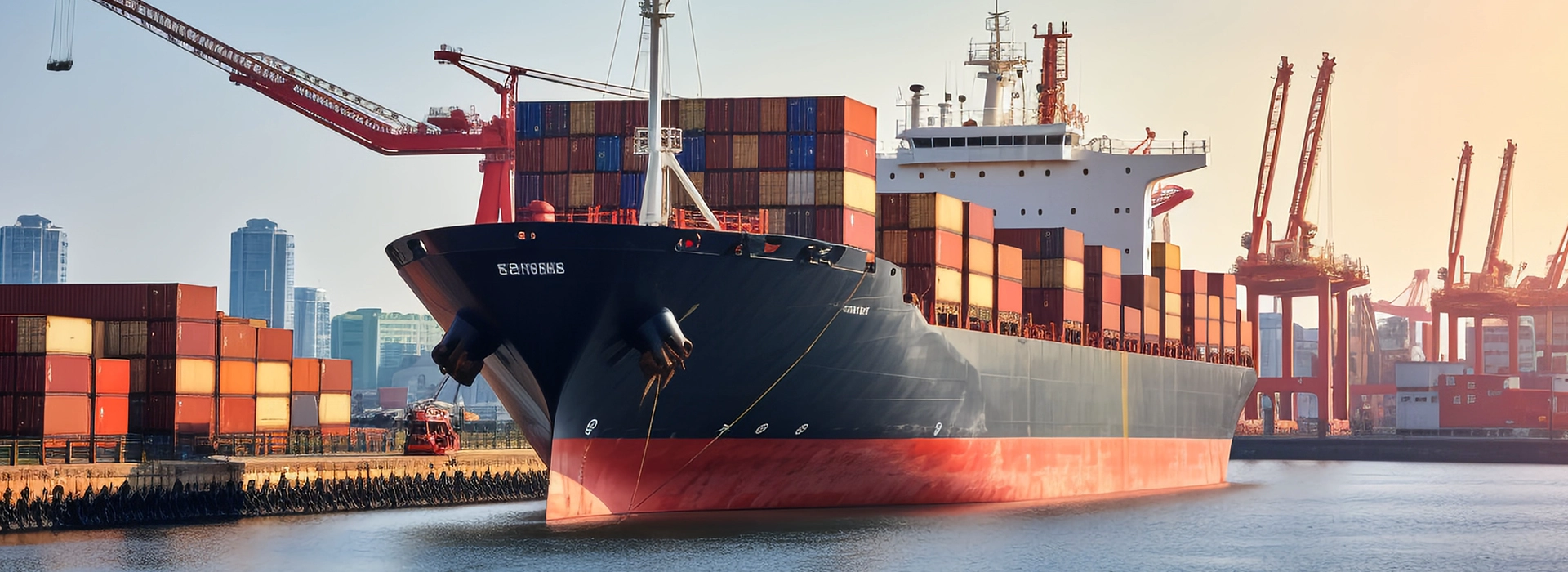
Cargo activity at Philippine ports continued to grow in the first half of 2026. The latest official data released by the Philippine Ports Authority (PPA) on August 28, 2026 stated that from January to June, ports managed by the PPA handled a total of 154.03 million metric tons of cargo, an increase of 3.08% from 149.42 million metric tons in the same period in 2025. During the same period, container throughput reached 4.3 million TEUs, higher than the 4.19 million TEUs in the same period last year, an increase of 2.65%. This set of data shows that in the context of continued changes in the global trade environment, the Philippine port network is still responsible for the stable flow of domestic and foreign goods.
From the perspective of business structure, the simultaneous growth of cargo throughput and container transportation has provided important support for the Philippine manufacturing, retail, construction and regional trade. PPA said that the increase in some port management offices mainly comes from bulk cargoes such as raw ores and metal ores. At the same time, container business at ports in the northern part of the National Capital Region, Palawan, and Batangas has also increased. International container business also grew at the Manila International Container Terminal and in places like Davao. The performance of cargo types and routes in different regions is not entirely consistent, but overall data shows that port infrastructure is still a key node in the operation of the Philippine supply chain.
Port efficiency is particularly important to the Philippines. As an archipelagic country, the Philippines needs to rely on sea transportation to connect major islands, industrial areas, consumer markets and export channels. Port processing capacity, yard turnover, container scheduling, truck connection and customs clearance efficiency will directly affect the transportation time and comprehensive cost of goods. Jay Daniel R. Santiago, general manager of PPA, said that ports are centers of cargo flow and economic activities. Improving efficiency, capacity and connectivity will help companies move products faster, support local industries and enhance national competitiveness.
This trend also echoes the ongoing infrastructure cooperation in the Philippines. On September 10, 2026, ABS-CBN reported that the European Union and Spain joined the Luzon Economic Corridor Initiative, expanding the number of cooperative members to 13. The corridor covers important economic hubs such as Subic Bay, Clark, Manila, and Batangas, and focuses on transportation infrastructure, supply chain connectivity, digitalization, and green development. The EU will align its 60 million euro green economy project and 20 million euro digital economy program with the corridor's key priorities; Spain will provide professional capabilities in areas such as railways, aviation, shipbuilding and air navigation management. For the freight industry, this type of investment and technology cooperation could lead to a more efficient intermodal network between ports, railways, airports and industrial parks.
However, the growth in freight does not mean that the pressure has been removed from all aspects of logistics. Carriers, cargo owners and freight forwarders still face practical issues such as route adjustments, fuel costs, port congestion, equipment availability, weather risks and destination country compliance requirements. The Philippine market has obvious island transportation characteristics. After international shipping arrives, end delivery needs to be completed through domestic branch lines, trucks or other transportation methods. Therefore, simply comparing ocean freight rates is often not enough to judge the true transportation performance of a shipment; booking stability, destination port operations, customs clearance coordination, warehousing arrangements, and exception handling capabilities are equally important.
For exporters and importers, the data released by the PPA releases two signals. First, Philippine port demand is still resilient, and companies should plan space, equipment and inland transportation resources in advance. Second, as corridor construction and port modernization advance, supply chain solutions will pay more attention to visualization, digitalization and multimodal transportation. When choosing a logistics partner, cargo owners can focus on evaluating their route experience between Yantian, Shenzhen and major ports in the Philippines, check the local fees, container-free period, customs clearance responsibilities and exception handling terms in the quotation, and choose a combination of sea, air, rail or land transportation based on the nature of the goods.
Overall, Philippine ports continued their growth trend in the first half of 2026, with both cargo throughput and container volume achieving year-on-year increases. In the future, port capacity expansion, digital connectivity, green projects and regional infrastructure synergy are likely to continue to shape the Philippine freight market. For companies that need to connect China's supply chain to the Philippine market, stable booking capabilities, a transparent fee structure and comprehensive services covering sea, land, air and rail will be important conditions for reducing transportation uncertainty and improving delivery efficiency.
FAQ
Q1: Are you a real freight forwarder or just a middleman agent?
A: We are a direct international freight forwarder, not an agent. Sunny Worldwide Logistics was founded in 1998 — with 27 years in shipping, we know every pitfall in freight and how to avoid them.
Q2: Do you have your own warehouse near the port?
A: Yes. We own an exclusive foreign-trade warehouse at Yantian Port — only 3 companies among 60,000+ forwarders in Shenzhen can say that. Your cargo is stored and loaded in our own facility, not handed to a third party.
Q3: Do you have your own trucks for pickup?
A: Yes, we operate our own fleet of container trucks, available on call — no waiting for outsourced trucking, which makes us one of the fastest in pickup among Shenzhen forwarders.
Q4: How long have you been in freight forwarding? Is your company reliable?
A: Since 1998, 27 years. We own a 1,800㎡ Grade-A office building in Longgang, Shenzhen — few forwarders in the city can match that strength.
Q5: What shipping services do you offer from China?
A: One-stop service: sea freight (FCL/LCL), air freight, railway, land trucking, customs declaration, warehousing, cargo inspection, container loading supervision, fumigation, and cargo insurance.
Q6: Can you pick up goods from my suppliers in Yiwu, Guangzhou or other cities?
A: Yes. We collect cargo from suppliers across China and consolidate it at our warehouse before shipping — with loading photos provided before departure.
Q7: Which countries do you ship to?
A: Worldwide — America, Europe, Australia, Middle East, Africa, Latin America. If there's a port, we can get your cargo there.
Q8: How can I get a shipping quote from China?
A: Send us your cargo details (type, volume/weight, destination) via:
📧 Email: logistics01@swwlogistics.com.cn
💬 WhatsApp/WeChat: +86-15323861694 (Lily)
📞 Tel: 0755-25643421
🌐 Rate inquiry: swwlsrates.com
Q9: Where is your company located? Can I visit your office?
A: 8th Floor, Block B, Rongde Times Square, Henggang, Longgang District, Shenzhen. Clients are welcome to visit.
Q10: Do you have any guarantee if something goes wrong with my shipment?
A: We take full responsibility for every shipment under our control — except force majeure (natural disasters). 27 years of zero-escape reputation backs every booking.