




















Panama Canal navigation restrictions have not yet been fully implemented, but container freight rates have responded in advance
Panama Canal restrictions have not yet been officially fully implemented, and the container market has been the first to react. Drewry's latest data shows that as of August 20, the spot freight rate for 40-foot containers from Shanghai to Los Angeles increased by 9% in a week to US$6,802, and from Shanghai to New York also increased by 9% to US$9,507. The route from Asia to North America is once again becoming one of the main driving forces for the rise in global container freight rates. Behind this round of rises, the Panama Canal is about to further reduce its capacity and is becoming a new variable.
Panama Canal capacity gradually tightened from September
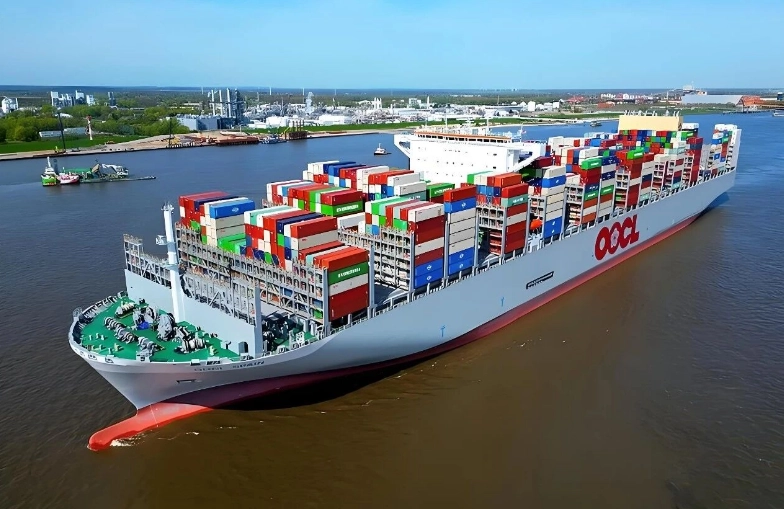
On August 20, the Panama Canal Authority issued the latest shipping notice, stating that due to insufficient rainfall in the canal basin, further restrictive measures will be taken. Starting from September 4, the daily available quota for New Panamax locks will be adjusted to 9, and the number for Panamax locks will be 25. From September 15, the daily quota for Panamax locks will be further reduced to 23, and the overall capacity of the canal will be gradually tightened.
The reason for the restrictions is not port congestion but water shortages. The Panama Canal relies on fresh water to operate, and ships need to consume large amounts of fresh water to pass through the locks. From May to August this year, rainfall in the canal area was about 34% lower than the historical average, and water inflow into the basin dropped by about 44%. Affected by the continued development of the El Niño phenomenon, the canal authorities are worried about further drops in water levels in the future, so they have taken preventive restrictive measures in advance.
Freight rates rise ahead of actual changes in navigation
The striking feature of this round of market changes is that freight rates have responded before the restrictive measures were fully implemented. Drewry data shows that in the week of August 20, the freight rate from Shanghai to Los Angeles increased by 9% to US$6,802/FEU, the freight rate from Shanghai to New York increased by 9% to US$9,507/FEU, and the WCI Composite Index rose by 4% to US$4,526/FEU. In contrast, the performance of the route from Asia to Europe was obviously different, with the freight rate from Shanghai to Rotterdam falling by 1% to US$4,401/FEU that week. The world's major east-west routes did not rise simultaneously, but showed significant differentiation: the trans-Pacific route strengthened, while the decline in the Asia-Europe route slowed down.
How will Panama Canal navigation restrictions affect routes from Asia to the West America?
The Panama Canal itself is not the core route from Asia to the West Coast of the United States - the mainstream route for Asian goods to the West Coast of the United States is across the Pacific Ocean, without passing through the Panama Canal. Those directly affected by the canal restrictions are routes from Asia to the East Coast of the United States and the Gulf of Mexico. However, global container shipping capacity as a whole, when some ships adjust their deployment due to canal restrictions and reduce the effective transportation capacity of relevant routes, shipping companies need to deploy ships throughout the network. At the same time, cargo owners may ship goods in advance to avoid subsequent route adjustments and capacity constraints, which will ultimately spread pressure to other trans-Pacific routes. This is also one of the important backgrounds for the first increase in freight rates from Asia to the United States.
Double pressure: reduced traffic combined with draft restrictions
In addition to traffic reductions, the Panama Canal has further tightened ship draft restrictions. The Canal Authority previously announced that the maximum allowable draft of New Panamax ships will be reduced to 48 feet (14.63 meters) starting from August 26, and further reduced to 47.5 feet (14.48 meters) starting from September 3. This means that even if passage space is obtained, some ships may still face load restrictions. For container ships, this will ultimately translate into reduced loading capacity, increased single-container transportation costs, and shipping companies rearranging space, resulting in dual pressures of reduced traffic volume and limited cargo carrying capacity of ships.
Shipping company launches surcharge adjustment
Canal restrictions have begun to be reflected in shipping companies' charging policies. Several carriers have announced the imposition of Panama Canal surcharges on routes from Asia to the U.S. East Coast and Gulf of Mexico starting in September. Mediterranean Shipping Company has previously announced that due to the ongoing draft restrictions in the Panama Canal, which has affected transit service capacity, it will adjust the surcharges from Asia to the East Coast of the United States and the Gulf of Mexico, which will be implemented from the gate entry date on September 12, and will apply to cargo shipped from Southeast Asia, China, South Korea and Japan to the East Coast of the United States and the Gulf of Mexico. Canal restrictions have begun to directly translate from changes at the route level into logistics costs for cargo owners.
Will the severe congestion in 2023-2024 be repeated?
It is not yet possible to make a simple analogy. When the Panama Canal encountered a severe drought from 2023 to 2024, the daily traffic volume at the lowest stage dropped from the normal approximately 36 ships to 22 ships, and the maximum allowable draft also dropped significantly. Some shipping companies were forced to redesign routes and even use land transshipment. This time, the canal took preventive measures at an earlier stage. According to the current arrangement, the daily traffic volume will be limited to about 34 ships starting from September 4. After further adjustments on September 15, the overall traffic capacity is still significantly higher than the worst period from 2023 to 2024. However, there is still uncertainty about whether El Niño will continue to strengthen and rainfall can resume. If water levels continue to drop, the possibility of further adjustments to traffic capacity cannot be ruled out. Reuters also pointed out that if the drought continues, the Panama Canal may further reduce available traffic.
Capacity, surcharges and booking strategies require continued attention
For companies that arrange cargo from Asia to North America in the near future, they need to focus on three changes: First, the reallocation of shipping capacity. After the available space in the Panama Canal decreases, some ships may adjust their deployment, and the effective shipping capacity of other routes may also be affected. The second is the increase in surcharges. Mediterranean Shipping Company has announced an adjustment to the Panama Canal surcharge. It is worth paying attention to whether other shipping companies will follow suit. Third, the value of advance booking is rising. Freight rates from Asia to the United States have increased significantly. If shipping companies further adjust shipping capacity, space and prices may continue to fluctuate during the peak season.
Overall, the impact of the Panama Canal has not yet reached the severity of 2023-2024, but a clear change has occurred: restrictions are still brewing, and the market has begun to price in advance. Freight rates from Asia to the United States rose 9% in a week, the global container index continued to rise, shipping companies initiated surcharge adjustments, and the canal still retains room for further measures. For the global container shipping market, following the risks of key passages such as the Red Sea and Hormuz, the water level of the Panama Canal is becoming another variable that affects route capacity and transportation costs. If El Niño continues to strengthen and the canal traffic volume is further reduced, the shipping disruption caused by "water shortage" may further be transmitted to freight rates, shipping spaces and the global logistics network.