The Philippines’ crackdown on the Balikbayan Box (packages for overseas Filipinos returning home) business continues to escalate.
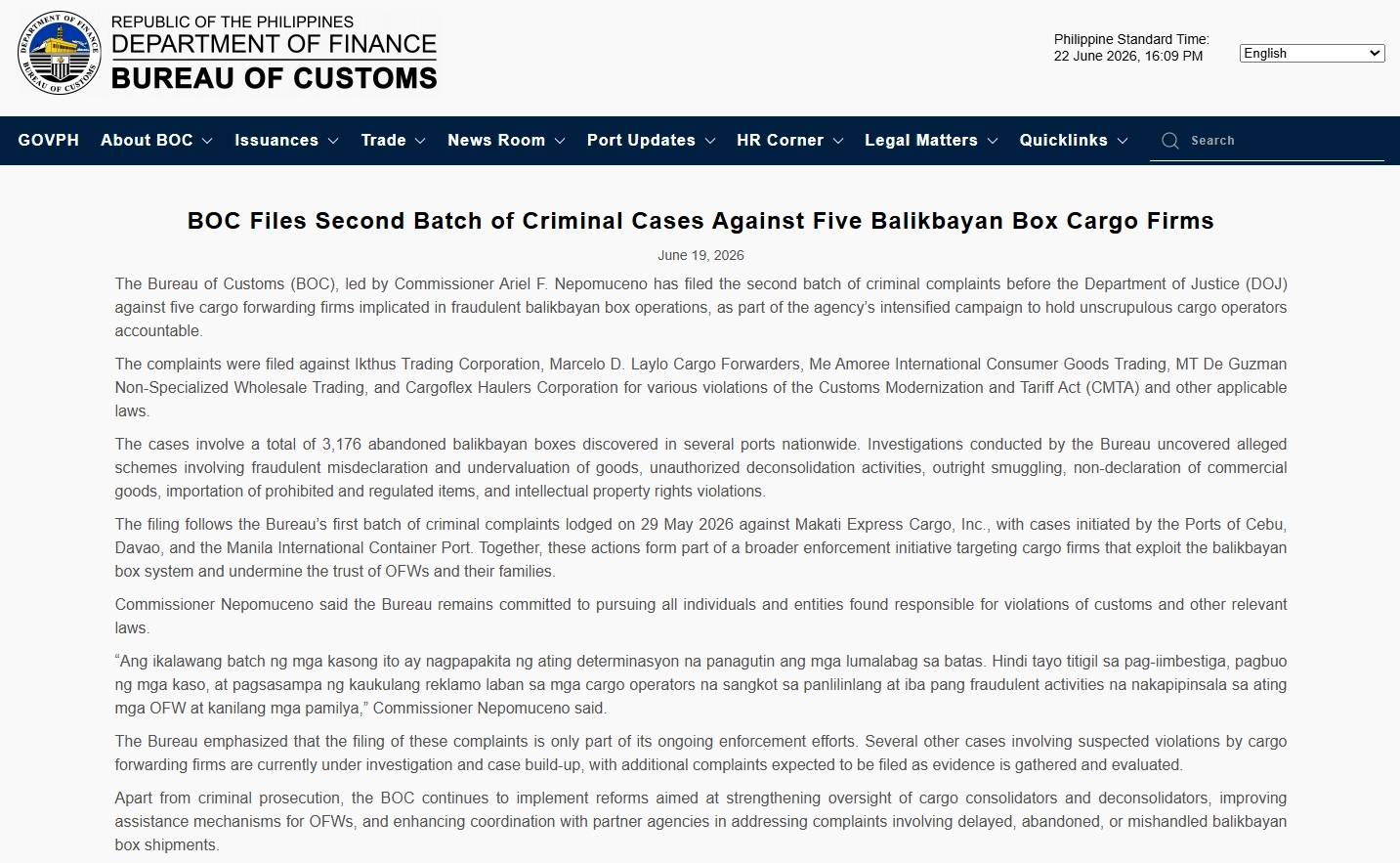
On June 19, the Philippine Bureau of Customs (BOC) announced that it had submitted a second batch of criminal complaints to the Department of Justice, involving five freight and container shipping-related companies. The case involves a total of 3,176 unclaimed Balikbayan Boxes found in multiple ports across the country.
According to the disclosure, the company being sued is suspected of problems such as false declarations, low declared values, unauthorized unpacking, undeclared commercial goods, smuggling, illegal imports, and intellectual property infringement.
This is the second time the Philippine Customs has publicly advanced a related case after it filed the first round of criminal complaints against another freight company at the end of May this year.
Two consecutive rounds of law enforcement actions have also caused many practitioners to begin to re-examine the market operating logic.
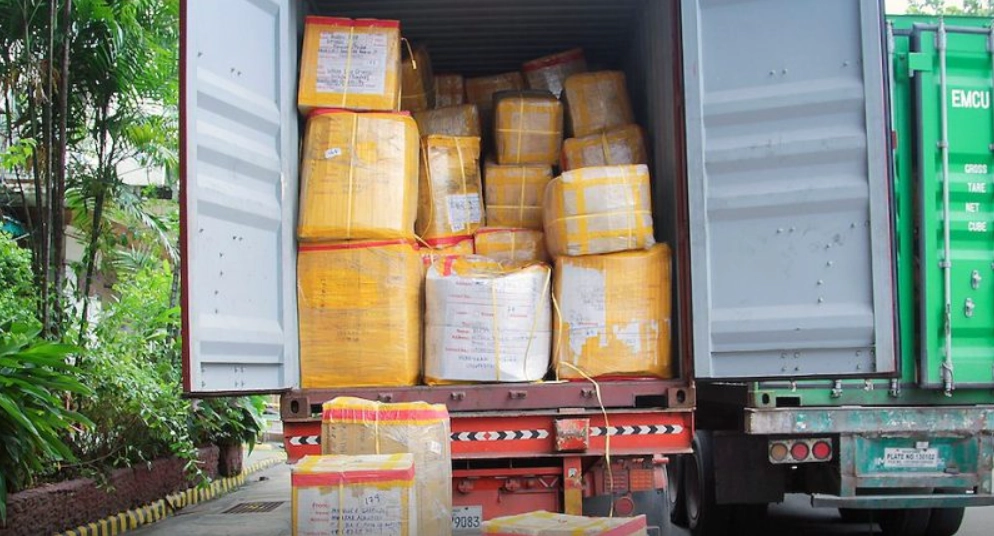
01 | 3176 abandoned boxes, the problem does not stop at end delivery
Balikbayan Box has always been a very special business form in cross-border logistics in the Philippines. A large number of overseas Filipino workers (OFW) have long been sending daily necessities, household supplies and consumer goods back to the country through consolidation channels.
Behind a package, there are usually multiple links including overseas receipt, consolidation, shipping, customs clearance, unpacking, and delivery. This type of business naturally relies on collaboration and highly relies on trust.
Over the past few years, as the market scale has expanded, some businesses have gradually experienced problems with blurred operational boundaries: personal packages and commercial goods are mixed, declarations are inconsistent with actual goods, responsibilities in the unpacking process are unclear, and there is a lack of unified standards for cargo value management.
The final result is often not an error in a certain link, but package delays, long-term detention in the port, no one to pick up, or even a backlog of the entire batch.
The types of violations disclosed by Philippine Customs this time basically cover the nodes on this link that are most prone to risks.
02 | After the regulatory action is upgraded, what changes may occur to the Philippine dedicated line first?
Judging from the current public information, this round of rectification is not a centralized cleanup, but more like a continuous advancement stage.
The Philippine Customs has made it clear that there are still other cases in the process of investigation and evidence collection, and complaints and law enforcement will continue to be promoted in the future.
For the market, the next more realistic changes may come from the operational level.
First, there is the possibility of further tightening of port of destination review and documentation requirements. In the past, the model relied on fast consolidation and fuzzy declaration to gain efficiency advantages. In the future, the operating space may be compressed, and the importance of data integrity and authenticity will increase.
Secondly, the division of responsibilities in the container transportation link will become more specific. From receipt and consolidation to unpacking and delivery, each node may need to leave more complete information records. The past practice of relying on experience to drive processes will become increasingly difficult in the future.
In addition, the logic of price competition may also change. When compliance investment increases, the companies that can truly operate stably are not necessarily the ones with the lowest quotations, but the ones that can continue to deliver and reduce abnormal parts and complaint rates.
03 | After this round of adjustments, which links will be affected first?
The Philippine market is not getting smaller, but the barriers to entry are changing.
For companies planning dedicated lines in the Philippines, Southeast Asia container shipping and Chinese logistics businesses, it is worth continuing to pay attention to the following:
✓ Whether customs clearance audit standards have been adjusted
✓ Whether the requirements for grouping and unpacking operations have changed
✓ Whether the review of customer application materials has been upgraded
✓ Is the boundary between commercial goods and personal items further clarified?
✓ Whether the exception handling and customer response mechanisms are complete
In cross-border logistics, many changes will not first appear in freight rates, but in processes, timeliness and customer experience.
This time the Philippines continues to advance cases, the impact on the industry may also unfold in this direction.