











Time limit collapses! Ports in many Asian countries are severely congested!
As the Lunar New Year approaches, due to the combined effects of multiple factors such as customs inspections, surges in cargo volume, and holidays, severe congestion has occurred in many important Asian container ports, including the Port of Ningbo and Shanghai in China, the Port of Manila in the Philippines, and the Port of Semarang in Indonesia.
Among them, Indonesia’s Semarang Port is facing severe congestion and the terminal faces the risk of operational interruption!
Many ports in China are facing challenges, with both storage yards and waiting berths under pressure
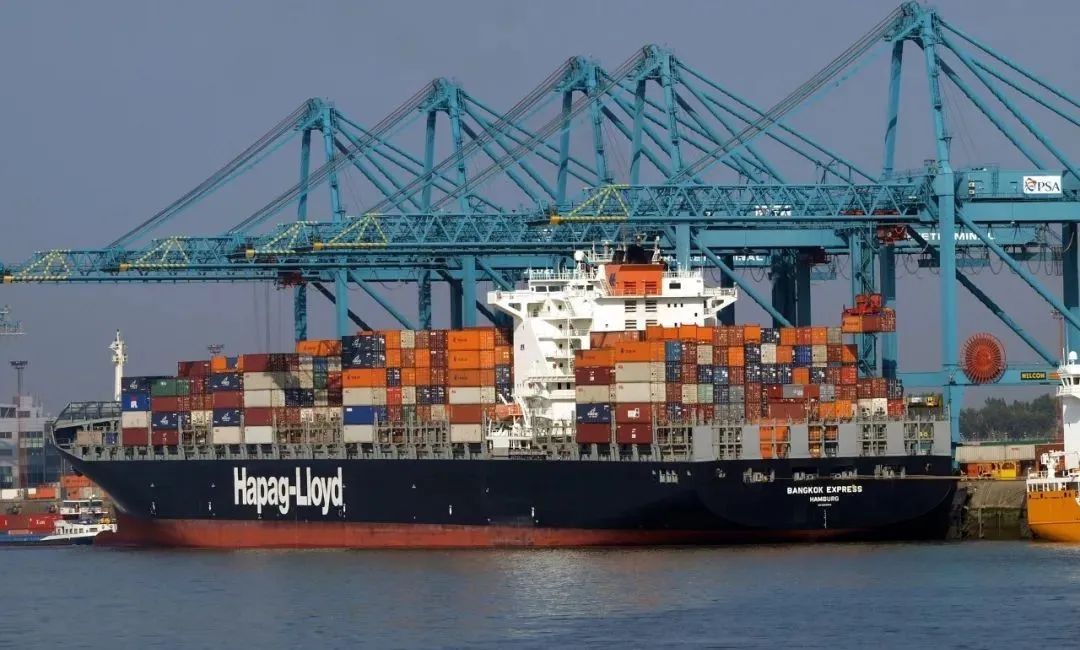
It is reported that Ningbo Port (Ningbo) currently has an increase in the number of ships waiting for berthing, and the average waiting time within 7 days is about 2.5 days. Among them, congestion at Meishan International Container Terminal (MSICT) and Chuanshan Container Terminal (CMICT) has further intensified, and the waiting time for ships has exceeded 3 days.
According to sources, the MSICT yard is currently in a highly saturated state, with the storage density exceeding 90%, which has a significant impact on the overall operating efficiency of the terminal. Both ship turnover and container loading and unloading operations are under certain pressure.
Data shows that the current waiting time for ships in Shanghai Port (Shanghai) remains at a relatively high level, with an average waiting time of about 2.13 days in seven days.
Among them, congestion at the Waigaoqiao Port Area (WGQ) terminal berths still exists, and the waiting time for ships is about 2 days. In Yangshan Port Area (YS), due to the concentrated arrival of ships and high demand for berths, the operating situation was still tight in the second week, and the terminal operation pressure was high. However, the previous congestion situation in Yangshan Phase I and Phase II (Y1, Y2) has been alleviated, and the overall operating efficiency has improved compared with the previous period.
In addition, the seven-day average waiting time for ships at Guangzhou Nansha Port is approximately 1.49 days. Although the overall situation has improved, terminals are still severely congested; the seven-day average waiting time at Qingdao Port is approximately 1.34 days. The overall situation further stabilized in the third week; however, congestion at Qingdao Port terminal berths still exists, and the waiting time is generally around 1-1.5 days.
Philippine ports: yard utilization remains high
As one of the important ports in Southeast Asia, the current overall operating pressure of the Philippine Port of Manila (Manila) is still high, with the average seven-day waiting time for ships being approximately 2.17 days. This data exceeds that of Shanghai Port and is second only to Ningbo-Zhoushan Port with an average waiting time of 2.5 days.
Among them, congestion at berths in Manila North and Manila South remains severe, and ships generally face waiting times of more than three days and delays in operations. At the same time, the utilization rate of the two terminals' storage yards continues to be at a high level, ranging from 85% to 90% overall, which further reduces the operating space and significantly restricts the operating efficiency of the terminals.
Indonesia’s Semarang Port: facing the risk of terminal suspension
Affected by the substantial increase in import and export volume, Indonesia's Semarang Port has experienced significant congestion recently, and port operations have been disrupted to varying degrees. Among them, the operating pressure of the Tanjung Emas Container Terminal (Tanjung Emas Terminal) is particularly prominent.
As import and export volumes continue to grow significantly and there is a serious backlog of original goods, Indonesia's Semarang Port is facing congestion and operational disruptions.
According to the latest report from Kuehne Nagel, since the end of December 2025, the cargo flow of Semarang Port has increased rapidly. The surge in import volume combined with road traffic restrictions during the Christmas and New Year periods led to a decrease in the efficiency of customs clearance of goods, and the backlog continued until the beginning of this year. As factories and logistics systems return to normal operations, import and export cargo volumes have simultaneously increased, further aggravating the port's operating load.
Against this background, the utilization rate of terminal yards continues to rise, available space is squeezed, and operational bottlenecks gradually emerge. At the same time, multiple feeder flights have arrived late to varying degrees, affecting berth connection efficiency and worsening the problem of ship berthing delays.
In addition, the terminal booking system is operating at close to full capacity, and customers may still be affected by unexpected factors during operation, such as traffic jams or local flooding on the road leading to the port.
In order to alleviate congestion, the terminal operator TPKS has taken a number of countermeasures, including adding a new yard area for empty container storage to improve the flexibility of container allocation; at the same time, it is evaluating the further use of terminal shoreline resources and considering using operating facilities equipped with four quay cranes to divert operating pressure. However, in the short term, the terminal will not accept applications for early entry into the port for container stacking, nor will it accept requests for early storage.
According to SeaExplorer data, there are currently 9 ships waiting to berth at the Semarang Port anchorage, and some ships have been waiting for berthing since January 17, 2026. As of today, the above-mentioned nine ships have been waiting for 6 days!
As the Chinese Lunar New Year approaches, it is expected that a new wave of shipments will arrive one after another. The majority of foreign trade export and freight forwarding logistics companies need to pay attention to the resonance effect caused by the previous year's shipment wave superimposed on existing port congestion.